Country Music History

Outlaw Country Era

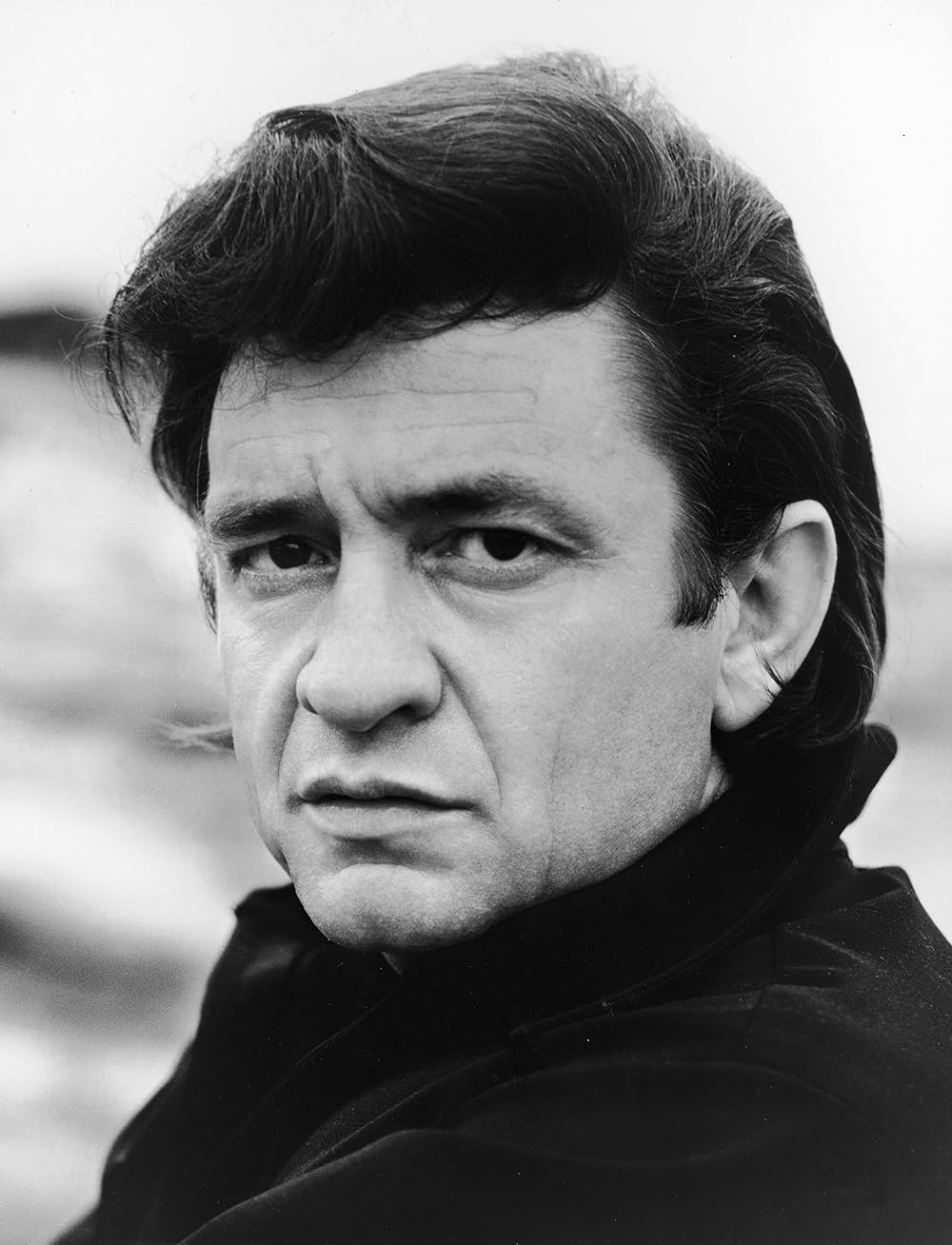
Johnny Cash

Johnny Cash, known as The Man in Black, was a legendary country singer, songwriter, and global music icon whose boom-chicka-boom sound and distinct deep voice bridged country, rock, folk, and gospel music. After serving in the U.S. Air Force, Cash launched his career at Sun Records in 1955 with early hits like Cry! Cry! Cry! and I Walk the Line, before signing with Columbia Records, where he expanded into concept albums, hosted a hit television variety show, and released landmark live prison recordings such as At Folsom Prison. Guided through personal struggles and addiction by his wife June Carter Cash, he maintained a revered career that included forming the country supergroup The Highwaymen in the 1980s. In the final decade of his life, Cash experienced a dramatic critical resurgence through his stark, acoustic American Recordings series produced by Rick Rubin—highlighted by his haunting cover of Nine Inch Nails' Hurt—solidifying his legacy prior to his death in 2003 and his enduring place in the Country Music Hall of Fame.
"Folsom Prison Blues"

Dolly Parton

Dolly Parton is one of country music's most celebrated singer-songwriters, cultural icons, business leaders, and philanthropists. Born in Locust Ridge, Tennessee, into a large Appalachian family, she began performing as a child before moving to Nashville in 1964. She achieved her national breakthrough in 1967 as part of The Porter Wagoner Show before launching a massive solo career with timeless classics like Jolene, Coat of Many Colors, and I Will Always Love You. Throughout the 1970s and 1980s, Parton expanded her reach into pop stardom and major film roles such as 9 to 5, later returning to her bluegrass roots in the late 1990s with critically acclaimed traditional albums. Beyond her music, she established the Dollywood theme park and launched the global Imagination Library literacy initiative, cementing her legacy as an influential icon inducted into both the Country Music Hall of Fame and the Rock & Roll Hall of Fame.

"Coat of Many Colors"

Willie Nelson

Willie Nelson is one of the most prolific, versatile, and enduring figures in American music history. Born in Abbott, Texas, in 1933, he absorbed diverse musical styles ranging from Texas honky-tonk to western swing and polka before relocating to Nashville in 1960, where he quickly established himself as a legendary songwriter penning hits such as "Crazy" for Patsy Cline, "Funny How Time Slips Away," and "Hello Walls." Frustrated by Nashville's polished production constraints, Nelson returned to Texas in the early 1970s and helped spearhead country music's Outlaw movement alongside close friend Waylon Jennings, producing sparse, landmark albums like 1975's Red Headed Stranger and the multi-platinum crossover standards collection Stardust in 1978. Beyond his solo recordings and film roles, Nelson formed the supergroup The Highwaymen with Johnny Cash, Waylon Jennings, and Kris Kristofferson, co-founded the Farm Aid benefit concerts in 1985, and earned numerous prestigious honors—including induction into the Country Music Hall of Fame in 1993 and the Library of Congress Gershwin Prize for Popular Song.

"Shotgun Willie"

Merle Haggard

Merle Haggard stands alongside Hank Williams as one of the most influential singer-songwriters in country music history, bridging honky-tonk, blues, jazz, and folk into a versatile and enduring sound. Born in Bakersfield, California, in 1937 to Okie migrant parents, Haggard experienced a turbulent youth that included multiple escape attempts from reform schools and a stint at San Quentin State Prison for burglary, where he famously turned his life around after attending a performance by Johnny Cash. Paroled in 1960, he pioneered the hard-hitting Bakersfield Sound as a counterweight to Nashville's polished production, scoring timeless hits like "Mama Tried," "Workin' Man Blues," "Silver Wings," and the controversial cultural anthem "Okie from Muskogee." Backed by his renowned band the Strangers, Haggard earned scores of honors—including induction into the Nashville Songwriters Hall of Fame in 1977 and the Country Music Hall of Fame in 1994—while maintaining a fierce creative independence and touring relentlessly until his death in 2016.

"Mama Tried"